Reflection

Confessions of a Hot Mess: Hamster in a Wheel

hamster-wheel-03-600Hello, dear mamas. Long time, no see. Once again, I have been remiss and Lindsay has been holding down the fort here at Raise a Mother. She’s been doing a fantastic job, I’m sure you’ll all agree. If you haven’t yet read her post “Letter to my Post-Partum Self“, do. It’s lovely and thoughtful, just like her.

Lindsay also wrote recently about bonding, and about how many of us are allowing ourselves to become “too busy” to connect with the people in our lives, instead collapsing at the end of each day in front of a screen. Reading this post made me feel uncomfortable and guilty, though I know that wasn’t close to Lindsay’s intent when writing it. You see, I am the hamster in that wheel.

Ladies, I have a confession to make: I am a hot mess. I eat more than I should, drink more caffeine and wine than I probably should, and weigh more than I should. I don’t sleep, or exercise, or floss as much as I should. I may or may not have finished the last bits of peanut butter from the jar by pouring in some chocolate chips and then scooping it out with a spoon (I totally did).

My absence from this blog comes down to one thing – I am terrible at taking time for myself. I work through my lunch break on a regular basis. I feel a compulsion to make sure that all my chores are done before I do something fun. Of course, with a toddler around, my chores are never done. They’re on an endless loop. I constantly feel “too busy” and collapse on the couch at the end of the night.

Here’s the thing, my lovely mamas: all things considered, I’m doing ok. I might personally feel sometimes like a human disaster, but I know my son, my husband and my family feel loved. I do need to do better on making time for myself, and I am working on it. At the same time, I know that my slightly OCD tendencies mean that I need my house to be tidier than many people need their houses to be in order to feel truly relaxed.

I know I’m not alone. We all have our quirks that shape the challenges we face in balancing our lives. I’m sure I’m not the only one of us to feel like I’m currently on a bit of a merry-go-round.

And so to you, my fellow hamsters, I say: You are not alone. You are doing a wonderful job and your kiddos love you. This particular marathon won’t last forever, so just do the best you can to make it all you want it to be. In the meantime, I’m waving from the next wheel over.

A Gratitude Journal: Birthing Conditions

A couple of months ago, Shannon introduced the idea of gratitude journal posts here in our village, so here’s a second one, sparked by this insightful photography series by WaterAid, highlighting the differences in what women pack in their maternity bags in the different places WaterAid works.
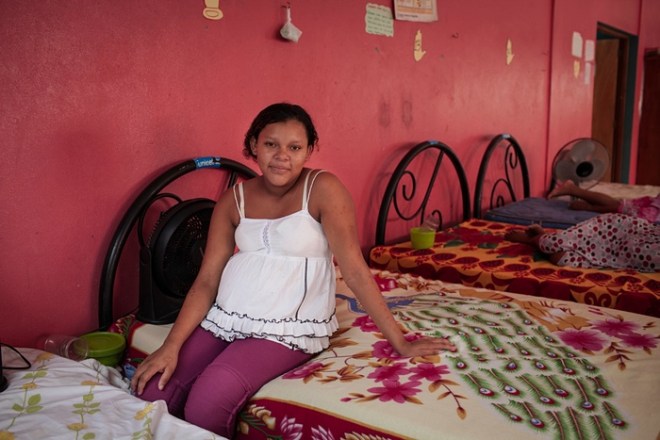
Mother Waiting

Mother-to-be Chadla in Nicaragua, photo by Jordi Ruiz Cirera/WaterAid

What struck me most as I read through the series is the number of women who include medical/hygiene necessities in their bags for the hospital. I packed an enormous bag to take to have my first child, but now that I think about it, every single item in there was a luxury – slippers to wear for pacing the halls, a bathrobe, a book to read, music to play (I may have even brought a card game?), a journal to write in, our camera, clean clothes for me and John, etc. Even the things that seemed like necessities – snacks, juice boxes, sanitary pads, diapers, my water bottle, an outfit for Arlo to wear home – could have been easily provided or substituted by the hospital in a pinch. Some of these women need to pack clean coverings for the delivery surface, towels, basins, razor blades, string, clean water to drink, and disinfectant.
Mat Bag Contents

Malawian mother-to-be Ellen’s maternity bag contents, photo by Jenny Lewis/WaterAid

 
I’m a little sheepish admitting that I didn’t even use any of the crap in my hospital bag during labour; Arlo was too fast for that. I ate some of the snacks I brought about an hour after he was born, but a nurse would have brought me food. The private birthing room had a beautiful tub where I had a hot bath of clean water before going home that night – and if I’d needed it, they would have had a bed for me to sleep in, with clean bedding and pillows.
 
So I’m feeling very grateful this morning for the provisions made for pregnant/birthing women in the country I was lucky enough to be born in, through no merit of my own. We tend in our culture to put a lot of stress and worry around labour/delivery, especially for first-time mamas, but this bigger-picture reflection helps me to both be thankful for and confident in the situation I face as a birthing woman.
 
If this photo series touches you similarly, here’s where you can learn more about and contribute to WaterAid’s Deliver Life Initiative. There are many similar causes out there as well, such as opportunities to fund a safe birth for a mama-to-be at Kangu.org, or enable a newborn checkup in a developing country through Plan Canada. Some baby registries, like BabyList (which I used and quite liked), allow you to include contributions to these organizations as options for your family and friends. Contributions like these are just one way we can expand our village beyond those in our physical communities, and extend our support to women the world over.

Bonding – a Whole Approach to Life

I recently read this beautiful essay on how human connection – not sobriety – is the remedy for addiction. I highly recommend reading the whole thing, but if you aren’t going to, I’ll try to snapshot the key points that have sparked my thinking here:

The author, Johann Hari, explains two separate addiction experiments done with rats, the long and short of which is that the rats who were kept in isolated, un-stimulating environments were exceptionally prone to drug addiction, but those who lived in ‘Rat Park,’ a healthy, happy environment for rats, were not. Moreover, once rats who had been conditioned to addiction in the isolated cages were allowed to live in Rat Park (“a lush cage” with “colored balls and the best rat-food and tunnels to scamper down and plenty of friends”), they quickly returned to a life free of drug use. He goes on to make comparisons to human examples of Vietnam-war veterans and those prescribed heavily-addictive drugs in hospital settings, which are quite interesting.

But my thought-train here has really nothing to do with addiction per se, or with rats, or with the ethics of animal experimentation. Rather, one of Hari’s passages struck me particularly:

“Human beings are bonding animals. We need to connect and love. […] But we have created an environment and a culture that cut us off from connection, or offer only the parody of it offered by the Internet.”

His argument is about addiction as a clinical condition, but I think his assessment of human beings is something we can all reflect on and learn from.

While not in as dire circumstances as many people, there are many of us living what appear on the surface, or from the outside, to be ‘full’ and ‘happy’ lives… or at least what ‘should’ be so. In truth, many of us live in self-constructed cages of isolation. Even if we’re not facing depression or constant physical isolation, we’re often more isolated than we would like to be. Why is that, especially if we are lucky enough to in fact have the means, the people nearby, and the opportunities, to be more connected, more bonded with our village?

Too often it seems we feel we don’t have the time to connect with our people, our friends and family; this is the most common cause I hear. But what are we doing instead? The usual culprits seem to be working, getting chores done, driving around to do errands, with the awful end result that when one does have some ‘free’ time, it needs to be ‘me’ time (read: a chance to collapse from exhaustion, to sleep or zombify in front of a screen).

But I think in these cases we need to question the importance of the things we’re using our time for instead of connecting – because at the end of the day, we are choosing to do so, and only by acknowledging our own agency can we start to either change it or become okay with it.

Do our living spaces really need to be tidy in order to enjoy our home with those we love? Does our time need to be ‘free’ of obligations or to-do lists before we can engage with our people? Or would it be better if we did more things communally – buying food, cooking, folding laundry – embracing that we’re all going through this together, rather than feeling we need to ‘get our shit together’ before we can enjoy one another’s company? Do we really need to ‘unwind’ at the end of a long day by scrolling through a social media feed that only gives us that ‘parody’ of bonding? We could instead be actually connecting with the people and activities that bring us joy, or indulging in that ‘me’ time by having a bath, walking outside, or doing an activity that engages our bodies and minds rather than just collapsing from exhaustion, often in front of a screen?

We have created a culture, as Hari says, “that cuts us off from connection.” The expectation is that we will all live in our own little kingdoms, whatever your particular box of living space looks like, and that our first responsibility is to keep our own kingdom in order. If we are good at keeping this order – bringing in the right amount of money for our lifestyle, tidying and cleaning, having the ‘right’ groceries in our cupboards with our near-future meal plans settled, having at least some plans in the works for how we’ll change our kingdom/life, and maintaining whatever image we’ve created of our lives in our online worlds – then we can occasionally, when it’s a ‘good’ time, invite others into our kingdom to enjoy the space we’ve cultivated, or allow ourselves some time away from our boxes to enjoy someone else’s kingdom… provided they have kept their kingdom in order, of course.

Perhaps we need to start living with each other, instead of alongside one other with the occasional meeting in the same space.

The people we wish we bonded more with might live in the same space as us, our spouses or children; they may live down the street or across town or across the country or the world, and technology may be a necessary tool for allowing us to simulate face-to-face interactions with some of them. We may wish to bond more with ourselves, to connect with our interests, and hobbies, those experiences that allow us to feel more alive, more engaged and joyful.

The point is not how we connect but whether the connection, the bonding, is a real bond or a parody. Even more so, the point is accepting our own agency (should we be so fortunate as to have some, as there are many in the world who truly don’t), so that when we feel we’re living in a cage, we can look around and determine honestly if the bars are real, or if we’ve given them form and weight with our own perceptions.

“Bonding” in this broader sense doesn’t seem to be something that can be done or felt effectively if only allotted in rare, discrete blocks of time; such a model means there will also be set times of isolation, boredom, or loneliness. It would be idealistic to think all of life will be continuous bonding and connection, but it also seems sad and unnecessary to resign ourselves to a life plan where bonding and connection are rare ‘treats’ if we’ve been ‘good.’ I’m not sure what the solution is, but I think it’s worth some serious consideration, and I hope some of you will leave your thoughtful comments below!

Letter to My Postpartum Self

If you’ve read this blog before, you might have come across my account of the dark, twisty postpartum period I had the first time around that caused my current, second pregnancy to, well, basically scare the shit out of me. Fortunately, I’ve had time to reflect, talk this fear out, and hear some wise words from other mamas in my village. Still, I know it’s easier to keep hold of these calming thoughts while Mister Baby is still in my belly than it might be once he’s out here in the world and my postpartum hormones mix with sleep deprivation in a toxic brew of negativity. So this letter is not only for me, to come back and hold onto in any twisty moments I might find in the year ahead, but also for any mamas out there who are in the dark place now, or who are pregnant and worried about moving into the dark once their baby arrives. Much love to you.

Dear Mama,

I know things are difficult right now. That things may seem like they’re falling apart, or that all your preparation has been for nought, or that you don’t even recognize who you are anymore, or maybe even all three at the same time. You may be questioning core things about yourself, your abilities, your judgment, your life, your partner, and not believing there could ever be a time where this uncertainty ends. All I can tell you is that even though you can see no light at the end of the tunnel, there is a lightI promise. I’ve been down this road before, and so have mamas since time immemorial. But I know that right now this seems like cheap platitude, so here are some thoughts for while you wait for that little light to appear and grow larger:

Hormones

They are rampaging right now, and are extraordinarily powerful, so don’t discount them. Remember those horrible adolescent years where you didn’t know what to do, or who you were, or how you were ever going to get to where you wanted to be? Same thing in early motherhood. This is hormones mixed with being thrown into the deep end of new expectations and new experiences, while striving for independence and a sense of accomplishment within this new angle of what it means to be a woman. But remember those wonderful teenage years where it seemed like everything might turn out a moony fairy-tale after all, and you couldn’t wait for all the fantastic experiences that were certainly ahead of you? This is early motherhood, too. This is hormones mixed with the delight in your little one’s smiles, snuggles, and that unbelievably good baby-smell.   So it’s a roller coaster, but a roller coaster you’re riding with a blindfold on. To pretend you’re taking a train ride, or to feel as if you should have been able to predict that next rise or fall, is ridiculous. You can prepare a bit, but some days, a fall you didn’t expect will still knock the wind out of you. When this happens, you don’t need to justify why – you’re on the roller coaster, that’s why.

Feelings

Similar to hormones, these are only sometimes things you have any control over, and they come in waves. Sorting out whether this particular rage about some unfinished laundry is the result of today’s emotional tsunami or a legitimate, last-straw outburst you would have had in the pre-baby days will be difficult. So if you think something specific or tangible is causing your melancholy or exasperation, notice it, but wait until the wave passes to decide how to move forward. Never be afraid of identifying a feeling, or admitting that you don’t know where it’s coming from, or that it’s overwhelming you. This is not a failure of rational thought – this is rational thought, because you’re recognizing the reality of your situation. The incoming tide will eventually stop, and you’ll be back to the emotional levels you’re used to handling as a reasonable adult.

Your Body

After birth it will be yours again, but not yours. You will still be attached to your babe for most of the day. You will not look like your pre-pregnancy body, at least not for awhile. You will not have your libido back, perhaps not for a much longer while than you find acceptable. You will be exhausted, at first from the experience of birth and its initial recovery, and then from carrying your wee one in your arms instead of in your belly, from night-wakings and extended periods of crying (from you or your little one). This is okay. Motherhood and marriage/partnership are long games, and you have time to adjust. There is no need to freak out about where you are 6-weeks, 3-months, or 8-months down the road from the birth day, or worry that this is where you’ll be forever. It isn’t.

10553883_10102005630891900_7139848070279818814_o

Housework

Acknowledge your role as a new mother, and not, unless this is your long-term plan, a ‘stay-at-home parent’ (even if this is your plan, give yourself some time to just be a new mom first). Keeping your baby alive and yourself sane can be a full-time job in itself, with simply no room in that job description for ensuring a tidy living room, kept-up laundry, made beds, or washed dishes. Keep the division and expectations of household labour at pre-baby levels until you’ve had a chance to adjust; don’t take everything on yourself just because you’re ‘at home’ now. If you’re going back to work after a year, this adjustment could be the whole damn year. That’s okay. If it takes less than a year, bonus for you, but treat it as a bonus, not an expectation.

Family

Fuck the advice you’ve received about ‘managing’ family interactions in the postpartum period – you’ve probably been told to both accept all help that is offered, but also to guard time to bond with your wee one so you’re not overrun with well-meaning visitors. This conflicting advice, especially while riding the hormonal roller coaster, might have you torn in the same day between desperately needing someone to be there to hold your baby so you can have a shower, but feeling like a failure if you ask for help because you can’t even manage to get a shower without assistance. Or feeling incredibly lonely for another grown up to talk to but also so drained you don’t have the energy to contribute to an adult conversation. In those moments, identify your feelings – loneliness, or irritability, or  perhaps a desire to just be alone with your baby but only-after-that-shower-because-unless-that-happens-you’re-going-to-go-crazy. Look at the feeling for a minute, then let it drop beside you onto the floor. And then ask for that help from someone who loves you, and be honest with them about that feeling so they can help you in the way you need, which is really what they want to do. Trust me.

Bonding with Your Wee One

You are your baby’s only mama, and no one can replace you. Even if/when you don’t breastfeed, even if you go back to work early, even if your wee one loves spending time with other relatives and friends… none of these things change that you are momSo embrace those other relationships for your child, embrace the good things that come along with the absence/end of breastfeeding (inebriants, non-nursing clothes, and outings longer than 2 hours, anyone?), and embrace the return to the parts of your professional work that you enjoy. Cut yourself some major slack on the bad days (see all the thoughts above), and luxuriate on the good days, so that you live presently in the moment with this new tiny person who is constantly learning more about the world, and about you, his mama. Love every new discovery. Teach him to breathe deeply through pain even when you think you might fall apart instead. And remember that this moment in time, whether it’s going fantastically or horrendously, will end. Let that knowledge increase your appreciation of the moment or your comfort for the future – or perhaps both, if it’s that kind of day.

10712701_10102104677381940_8734868266176525875_n

Remember that you are working through a tremendous feat, walking on the rocky mountain that is the postpartum period. There is no finish line, no set path, no goal to get to the top, even though it may feel like you should have such a goal in sight. There is only your experience of each day on the mountain, how you feel there, and the memories you will keep later. Eventually you will leave this mountain, but you may not even notice when the ground evens out. So don’t worry about looking for the plateaus – just live in the place you are today, find a spring of fresh water and a soft place to lay yours and your baby’s head. Whenever the sun is out, take a pause to let it warm your face. If you do that each day, you’ll be just fine.

Love,

Lindsay

Mom Things I Learn During Yoga #2

Recently, my husband and I were at partner prenatal yoga. The last class of each eight-week session is always offered as a partner class, which is just one of things I love about the yoga through Rebirth Wellness Centre here in my hometown of London, ON.

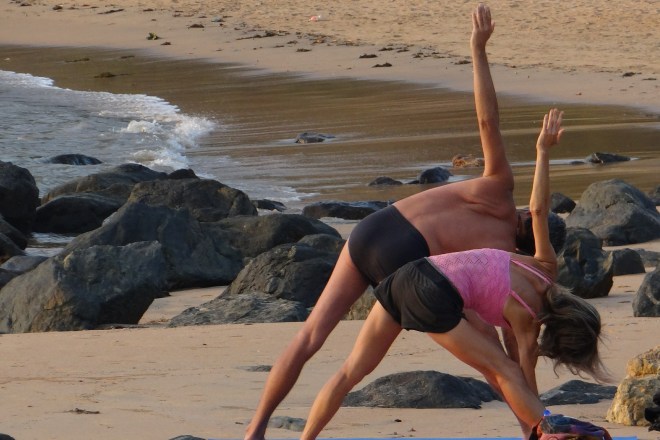
In this particular class, the teacher was directing the partners to massage the pregnant yogis as we lay in relaxation pose with our eyes closed. We had been having a pretty standard yoga class experience – calm, focused, quiet. And then my husband decided to mess with the calm: when the teacher encouraged the massagers to touch their pregnant partners in “the way that feels good,” my husband stuck his hand down my shirt, and nudged his other thumb into my mouth, just for a second. I couldn’t help cracking a smile, and had to do my best not to laugh so as not to disrupt the other participants.

In that moment, he had broken the yoga code, since we were supposed to be all zen and focused. Often, this might have irritated me, as I really like to maintain the calm and quiet of yoga, the soft, introspective nature of the practice. But somehow, it didn’t bother me. And for the rest of the class we kept being a little bit silly: silently high-fiving when balancing in partner tree pose, grinning with mock-risk that we might fall over when sinking down into a partner squat.

My husband reminded me in that class that it’s important not to take things too seriously, and that even if I usually like something one way – a calm, focused yoga class, for instance – allowing myself to enjoy a shared experience of that same activity in a different light is not only okay, it just might even be better sometimes.

As a parent, this applies to lots of activities, especially with a toddler. While my impulse might be to try to introduce my kids to life experiences in the way that I have always enjoyed them – dancing to a certain kind of music, noticing certain things on a walk in the woods, or tackling a household chore with a certain focus/drive – it’s also important to sometimes let them take the lead. Because trying those same experiences with them the way they want to feel them, and the way they want to learn, might open up a new experience for me, too.

1 5 6